Pressure Vessel Inspections
API 510-compliant pressure vessel inspections with corrosion analysis, remaining life assessments, and full audit-ready documentation for every vessel in your facility.

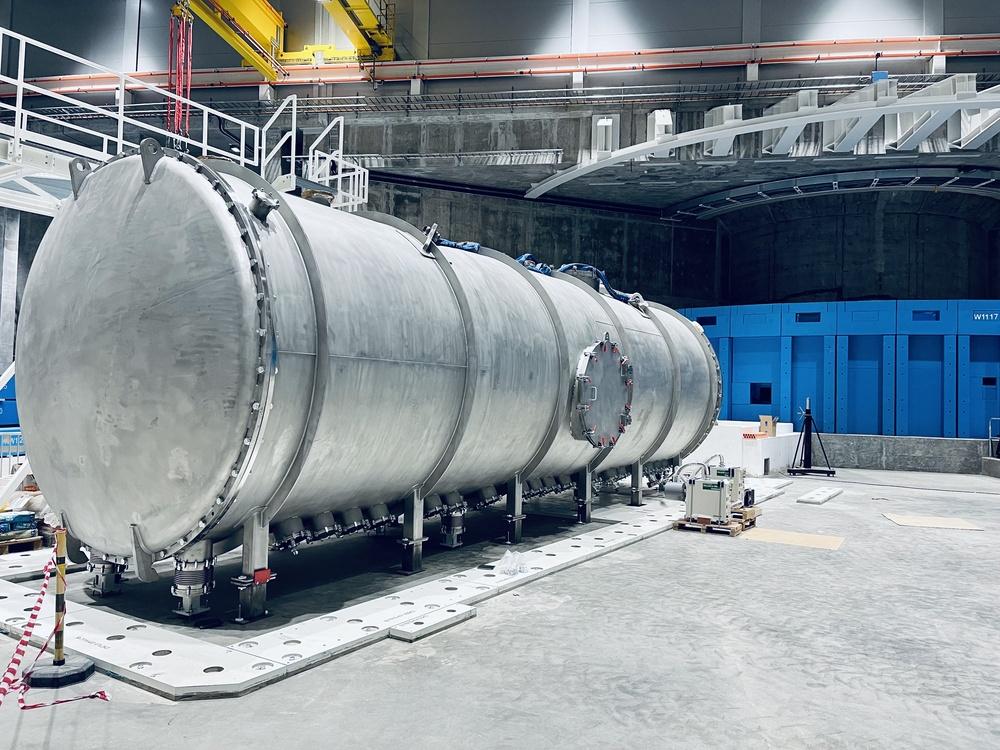
Pressure vessels are among the highest-risk pieces of equipment in any process facility. Operating under elevated temperatures and pressures, they are subject to continuous mechanical stress, corrosion, erosion, and fatigue mechanisms that degrade their structural integrity over time. The consequences of a pressure vessel failure range from costly unplanned downtime to catastrophic rupture, fire, explosion, and loss of life.
At Precision MCS (PMCS), we deliver rigorous, code-compliant pressure vessel inspection services that give facility owners, operators, and inspection managers the data and documentation they need to make confident run-repair-replace decisions. Our inspectors bring extensive practical field experience in refineries, chemical plants, offshore platforms, and general process industries, backed by API 510 certification and a commitment to thorough, accurate inspection practice.
Pressure vessel inspections at PMCS are conducted in accordance with the following codes and standards: API 510 (Pressure Vessel Inspection Code, Maintenance, Inspection, Rating, Repair, and Alteration), ASME Boiler and Pressure Vessel Code (BPVC) Section VIII Divisions 1, 2, and 3, the National Board Inspection Code (NBIC), applicable state and local jurisdictional requirements, and facility-specific inspection plans and engineering specifications. Our inspection plans are developed with an understanding of both the mechanical demands on your vessels and the regulatory environment in which your facility operates.
PMCS conducts all categories of pressure vessel inspection including: external visual inspections to assess external corrosion, insulation condition, support integrity, and surface coating degradation; internal inspections involving entry into the vessel to assess shell plates, heads, nozzles, internals, and weld seams; on-stream inspections using non-destructive examination (NDE) techniques to evaluate vessel condition without taking it out of service; and fitness-for-service (FFS) assessments per API 579 to determine whether a vessel with known damage or deterioration can continue to operate safely.
PMCS inspectors are experienced with a broad range of NDE methods applied during pressure vessel inspections: Ultrasonic Thickness (UT) measurement for wall loss quantification and corrosion mapping; Magnetic Particle Testing (MT) for surface and near-surface crack detection in ferromagnetic materials; Liquid Penetrant Testing (PT) for surface-breaking discontinuities in non-ferromagnetic materials; Radiographic Testing (RT) for internal weld and material evaluation; Phased Array Ultrasonic Testing (PAUT) for advanced flaw characterization; and Visual Testing (VT) as the foundation of all inspection activities. The specific NDE methods applied to each vessel are determined based on the damage mechanisms present, the inspection history, and the applicable code requirements.
One of the most critical outputs of any pressure vessel inspection is an accurate understanding of corrosion rates and remaining vessel life. PMCS performs systematic thickness measurements at defined locations across each vessel, calculates short-term and long-term corrosion rates based on historical data, determines remaining corrosion allowance, and projects retirement dates based on current degradation trends. This data feeds directly into your inspection interval planning, ensuring that inspection frequency is calibrated to actual corrosion behavior rather than arbitrary schedules.
API 510 provides guidance on establishing appropriate inspection intervals based on the type of inspection, the corrosion rate, and the operating conditions of each vessel. PMCS works with your inspection team and plant engineering to establish risk-informed inspection intervals that satisfy API 510 requirements while optimizing the use of your inspection resources. Where applicable, we support the implementation of Risk-Based Inspection (RBI) programs per API 580 and API 581 to further refine interval planning based on likelihood and consequence of failure.
Every pressure vessel inspection conducted by PMCS results in a comprehensive inspection report that includes: vessel identification and service information; inspection scope and methods applied; findings by location with photographic documentation; corrosion rate calculations and remaining life projections; code compliance assessment; corrective action recommendations with priority classification; and a fitness-for-continued-service determination signed by a certified inspector. Reports are delivered in a clear, organized format suitable for your management of change (MOC) process, regulatory submissions, and audit files.
PMCS provides pressure vessel inspection services to oil refineries, petrochemical and chemical processing plants, power generation facilities, natural gas processing operations, offshore production platforms, pharmaceutical manufacturers, and any process facility with a pressure vessel inventory requiring code-compliant inspection and documentation. Our inspectors are available for both scheduled inspection programs and emergency condition assessments.
.jpg)

Full mechanical and structural inspection of your clarifiers, sludge collectors, and effluent weirs, so wear gets caught early, effluent stays in spec, and you're not blindsided by an outage.


API 570-compliant piping inspection services covering thickness measurement, corrosion assessment, CUI evaluation, and fitness-for-service determinations for process piping systems of all types.